
NewsDetails
What are the differences between concentric reducers and eccentric reducers? What are their respective applications?
author:Kairuifeng time:2026-09-29 22:17:56 Click:157
Question: What is the difference between concentric reducers and eccentric reducers? In what situations are they used respectively?
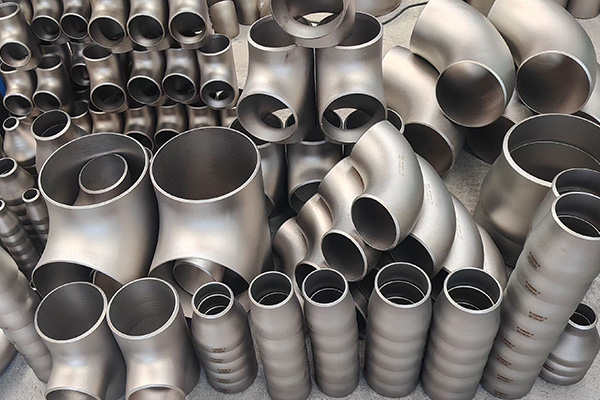
A reducer (also known as a tee) is a common pipe fitting used in piping systems to connect pipes of different diameters. Structurally, reducers are divided into two types: concentric reducers and eccentric reducers.
I. Structural Differences
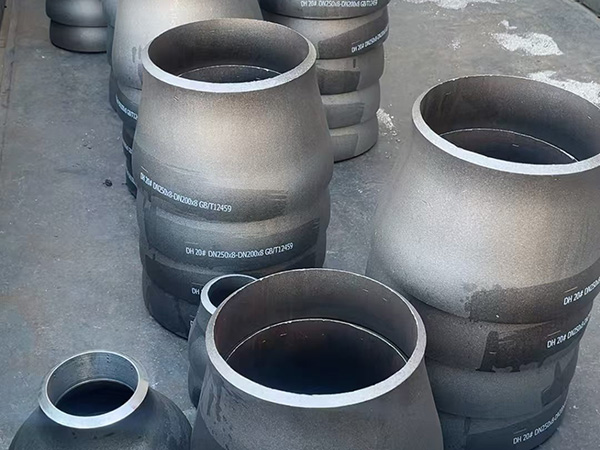
1. Concentric Reducer: The centers of the pipe openings at both ends lie on the same axis, with a conical frustum shape and symmetrical sides. Viewed from the side, the centerline is a straight line, and the centers of the pipe openings at both ends coincide on the centerline.
2. Eccentric Reducer: The centers of the two pipe ends are not on the same axis, with one side of the outer wall being straight and the other side inclined. It is further divided into top-flat eccentric reducers (with a straight top outer wall) and bottom-flat eccentric reducers (with a straight bottom outer wall).
II. Differences in Fluid Dynamics Performance
Concentric Reducer: When fluid passes through, the flow field is symmetrical, the velocity distribution is uniform, the flow resistance is small, the pressure loss is small, and no biased flow or vortex is generated.
Eccentric Reducer: When fluid passes through, the flow field is asymmetric, resulting in a certain degree of deflected flow and vortices, with a slightly higher flow resistance than that of a concentric reducer. However, the eccentric design ensures that one side of the pipe is flush, meeting specific installation and process requirements.
III. Detailed Explanation of Applicable Scenarios
Applications of concentric reducers:
1. Vertical pipe reducer — Vertical pipes do not have issues with liquid or gas discharge. Concentric reducers have low flow resistance and uniform stress distribution, making them the optimal choice;
2. Pump outlet piping — The fluid pressure at the pump outlet is high, so cavitation will not occur; a concentric reducer can be used;
3. Reducers at the inlet and outlet of equipment such as flow meters and valves — high requirements for fluid flow conditions; concentric reducers should be selected;
4. Process piping that requires a uniform fluid flow profile, such as mixer inlets, reactor inlets, and sampling lines for analytical instruments;
5. Gas pipe reducer — Since gas pipes do not have a liquid drainage issue, a concentric reducer is generally recommended.
Applications of Eccentric Reducers:
1. Horizontal liquid pipe reducer (bottom flat type) — ensures the bottom of the pipe is level, facilitating drainage and preventing the formation of stagnant liquid dead zones at the reducer;
2. Pump inlet piping (top-flat type) — A top-flat eccentric reducer must be used! This prevents the formation of air pockets at the top of the reducer, which could be drawn into the pump and cause cavitation, vibration, and noise, potentially damaging the pump impeller in severe cases;
3. Situations where installation space is limited and one side of the pipe needs to be flush;
4. Piping with solid particle media (flat-bottom type) — to prevent solid particles from depositing and causing blockages at the reducer;
5. Viscous medium piping (flat bottom) — facilitates medium flow and complete drainage.
IV. Selection Decision Table
For vertical pipes or any medium, select concentric reducers; for horizontal pipes carrying liquids, select bottom-flat eccentric reducers; for horizontal pipes carrying gases, select concentric reducers; for pump inlets with any medium, select top-flat eccentric reducers; for pump outlets with any medium, select concentric reducers; for horizontal pipes containing solid particles, select bottom-flat eccentric reducers; for any medium upstream and downstream of flow meters, select concentric reducers.
V. Precautions
1. Reduction ratio limit: The reduction ratio of a reducer generally should not exceed 3:1; if it is too large, multi-stage reduction or a conical pipe should be used;
2. The pump inlet must be top-flat: This is a mandatory specification; the use of concentric reducers or bottom-flat eccentric reducers is strictly prohibited;
3. Horizontal liquid piping shall be bottom-flat as a priority, unless otherwise specified;
4. Mark the installation direction: Eccentric reducers are directional. When installing, pay attention to the top flat/bottom flat direction; do not install them in reverse.
5. For high-pressure conditions, seamless reducers should be preferred.
Cangzhou Kairuifeng Pipeline Equipment Co., Ltd. specializes in the production of concentric reducers and eccentric reducers (top flat/bottom flat available), with a full range of specifications. We welcome your inquiries and purchases.
 Contact us
—— Contact:Manager
—— Tel:+86 15720204999
—— Email:zeleiliu97@gmail.com
—— Url:https://www.krfpipe.com
—— Address:No. 108 Longhai West Road, Yanshan Town, Yanshan County